A rental car advertised at $35 per day can easily cost twice that amount after taxes, optional products, and location charges are added. The lowest headline rate rarely represents the final bill. Understanding how rental companies structure their pricing helps you compare offers accurately, reject unnecessary extras, and avoid penalties. This guide explains the most common rental car fees and shows you what to check before confirming a reservation.
Understanding the Base Rental Rate
The base rate covers the use of a vehicle for a defined period, usually calculated by day or week. It may include unlimited mileage, but this is not guaranteed. Rates depend on vehicle category, location, demand, season, and booking date. A weekly rate can be cheaper than paying for five or six individual days. However, returning the car early may cause the company to recalculate the rental using a higher daily rate.
Taxes and Government Charges
Sales taxes, tourism taxes, vehicle licensing charges, and local surcharges may appear as separate items. Some are fixed amounts, while others are calculated as a percentage of the rental price. These mandatory charges cannot normally be declined. Review the estimated total rather than comparing companies based only on their advertised daily rates.
Airport and Facility Fees
Airport rental locations often charge concession recovery fees, customer facility charges, or transportation fees. These costs help fund airport operations and rental centers. Renting from a neighborhood office may reduce the total, although transportation to that location should be considered. Some airport fees still apply if an off-site company uses an airport shuttle.
Insurance and Protection Products
Collision and Loss Damage Waivers
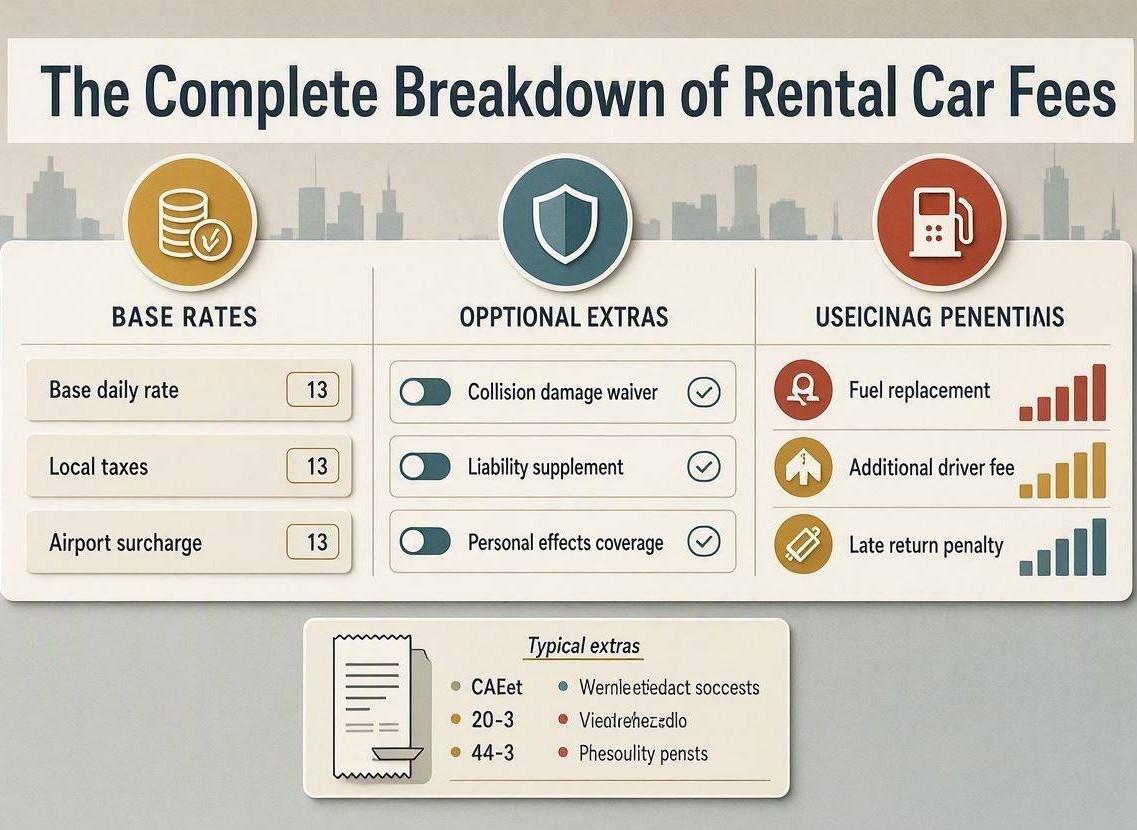
A collision damage waiver or loss damage waiver limits your financial responsibility if the rental vehicle is damaged or stolen. It is not always traditional insurance, and exclusions may apply for unauthorized drivers, reckless use, lost keys, or prohibited roads. Before purchasing it, check whether your personal auto policy or credit card already provides rental vehicle coverage. Credit card protection may be secondary and can require you to pay the rental company before seeking reimbursement.
Liability and Personal Coverage
Supplemental liability insurance increases protection for injuries or property damage caused to others. Personal accident insurance may cover medical expenses, while personal effects coverage protects belongings. Existing auto, health, homeowners, or travel insurance may duplicate these benefits. Confirm limits and exclusions with your insurer instead of assuming you are fully covered.
Usage-Based and Convenience Fees
Fuel Charges
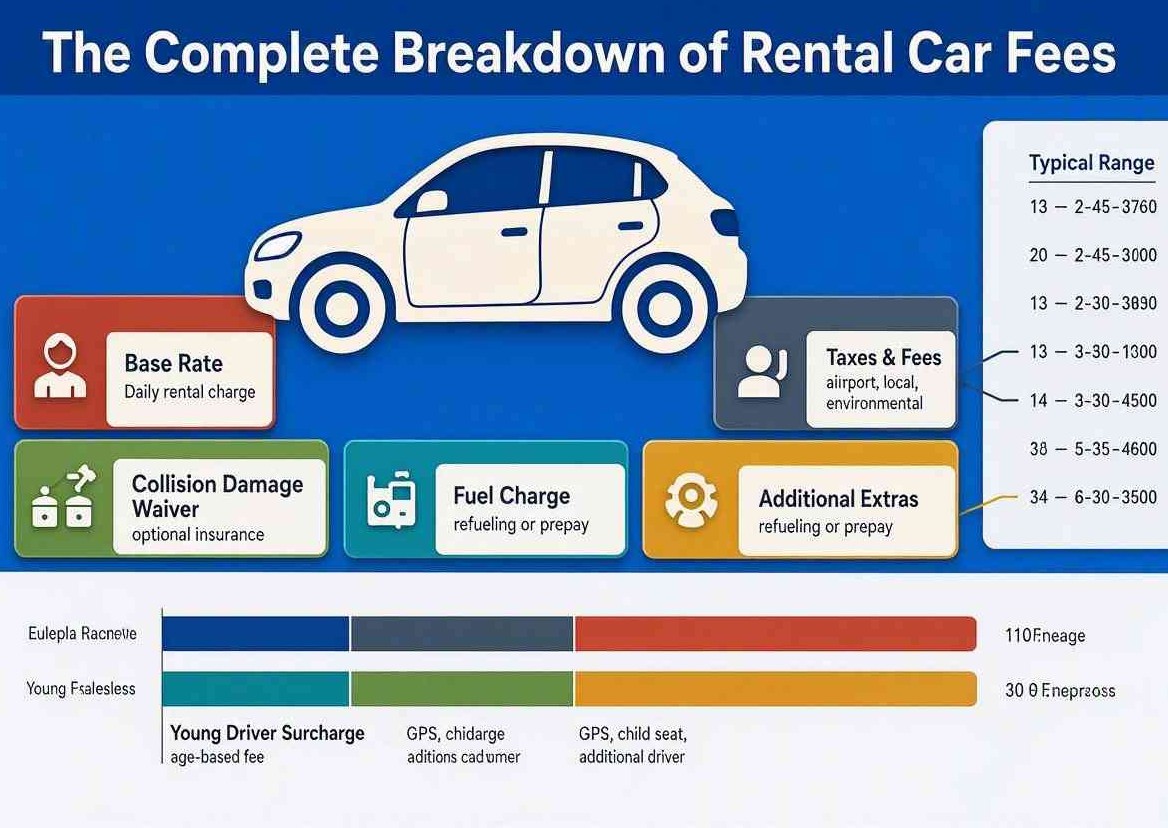
Most rentals use a full-to-full fuel policy. You receive the car with a full tank and must return it full. If you do not, the company can charge a refueling rate significantly higher than nearby gas stations. A prepaid fuel option is convenient but usually provides no refund for unused fuel. Keep your final fuel receipt in case the return reading is disputed.
Mileage and Geographic Restrictions
Unlimited mileage is common for standard rentals, but specialty vehicles and local deals may have daily limits. Excess mileage is billed per mile or kilometer. Contracts may also restrict travel across state, provincial, or national borders. Violating these rules can invalidate protection products and create additional recovery costs.
Tolls and Road Charges
Electronic toll programs allow convenient travel on cashless roads, but they may include a daily service fee in addition to the toll itself. In some agreements, the administrative fee applies every rental day once the device is used. Ask whether you can use your own toll account or pay tolls directly without enrolling in the rental company’s program.
Driver, Location, and Equipment Charges
Young Drivers and Additional Drivers
Drivers under 25 commonly pay a daily young driver surcharge, although the age threshold varies. Additional authorized drivers may also generate a daily fee. Spouses or domestic partners are sometimes exempt under local law or loyalty program benefits. Every person who may drive should be listed because an unauthorized driver can compromise insurance coverage.
One-Way Rentals and Optional Equipment
Returning a vehicle to a different location can trigger a one-way or drop fee. The amount depends on distance, fleet demand, and route popularity. Optional items such as child seats, GPS units, satellite radio, ski racks, and mobile Wi-Fi are normally priced per day. Bringing your own equipment can produce substantial savings on longer trips.
Return Penalties and Unexpected Costs
Late returns may result in hourly charges, an extra rental day, or both. Cleaning fees can apply to smoke, pet hair, stains, sand, or excessive dirt. Lost keys, missing accessories, traffic violations, towing, and vehicle recovery also create charges. Rental companies typically place a temporary authorization hold on your payment card, reducing your available balance until the contract is closed.
How to Compare the True Rental Cost
- Compare the final price with all mandatory taxes and fees included.
- Check mileage limits, fuel rules, deposit requirements, and cancellation terms.
- Verify insurance coverage before arriving at the counter.
- Photograph the vehicle at pickup and return, including the fuel gauge.
- Request a receipt and review every charge before leaving.
The best rental deal is not necessarily the lowest daily rate. Calculate the complete trip cost, including protection, fuel, tolls, equipment, and location fees. Reading the rental agreement in advance gives you time to question unclear charges and choose only the services you genuinely need.
