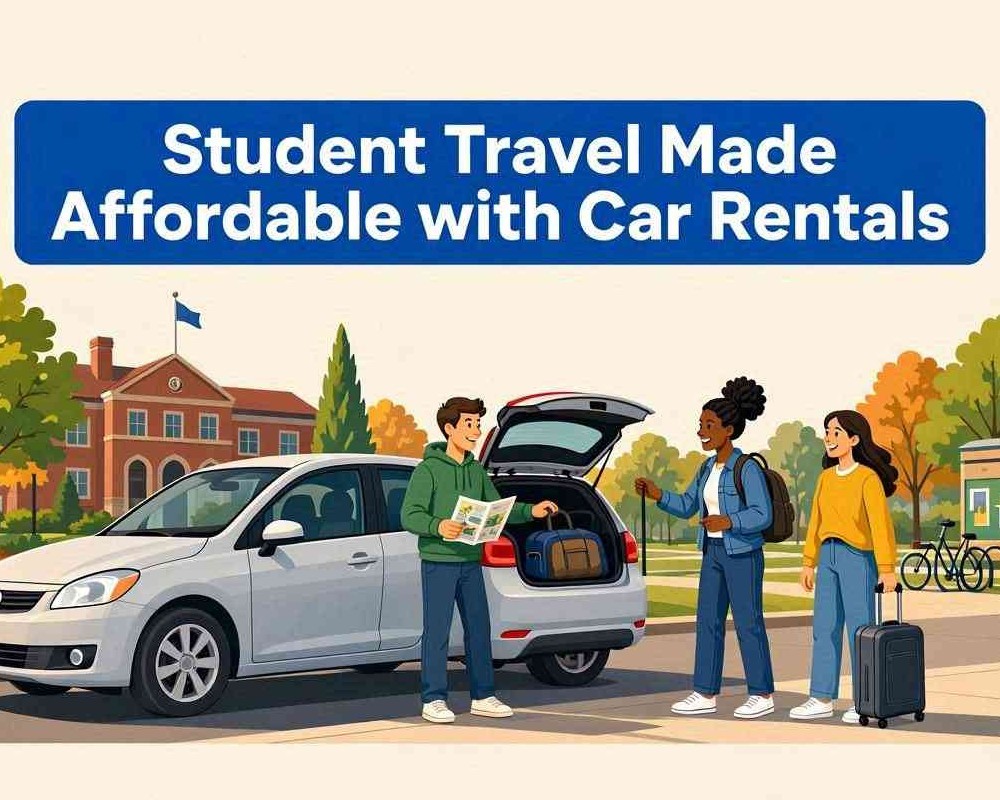
Student travel is exciting, but budgets are tight. While public transport can work for some routes, it often fails when you need flexibility - especially for weekend trips, rural destinations, or group visits to friends. Renting a car can turn a limited itinerary into a real adventure, provided you plan smartly. This guide explains practical ways students can keep rental costs under control and still enjoy comfort, safety, and freedom.

Why car rentals can beat the student travel budget
For many students, the biggest travel problem is not the destination - it is the cost of getting there and staying mobile once you arrive. Car rentals help because you can distribute the total expense across passengers and reduce time lost to transfers. Instead of waiting for multiple buses or trains, you can build an itinerary that matches your schedule.
Key budget advantages
- Group splitting - one rental cost can cover several students.
- Door-to-door travel - fewer paid rides to stations and back.
- Flexible stops - you can choose attractions without fixed timetables.
- Better value on off-peak days - pricing often improves during weekdays.
When you plan routes efficiently and avoid unnecessary add-ons, the total cost can be surprisingly competitive with public transport - particularly for trips where you would otherwise pay multiple tickets.
How to find affordable rental deals
Cheap rentals are not only about the lowest daily rate. The final price depends on insurance, fees, mileage rules, and pickup timing. Students should focus on the overall cost, not just the headline number.
Practical steps to reduce the total price
- Compare total cost across dates, not just the car category.
- Check fuel policy - full-to-full is often simpler and fairer.
- Review mileage limits - choose unlimited when road trips are likely.
- Look for free cancellation or flexible changes to handle schedule shifts.
- Book early for popular periods, but also monitor prices close to departure.
Also verify the location details. Airport pickup may include additional charges and extra distance to the drop-off. If your itinerary allows it, consider renting from a city branch with lower fees and shorter transfer costs.
Insurance and fees - what students should understand
Insurance is where many student renters overpay due to confusion. The goal is to get adequate protection while avoiding unnecessary duplication. Start by checking what you already have through your student travel arrangements, credit card coverage, or existing insurance. Then compare with what the rental company offers.
Common add-ons and how to evaluate them
- Collision Damage Waiver - often helpful, but check if your coverage already includes it.
- Theft Protection - useful if you will visit high-traffic areas and leave the car unattended.
- Roadside Assistance - valuable for students who may be unfamiliar with local conditions.
- Additional Driver fee - avoid by listing everyone who will drive before pickup.
Fees can also appear under different names - facility charges, vehicle preparation fees, and service fees. Before confirming, review the final quote carefully and look for charges that do not scale with your time length.
Route planning that saves money and time
Car rentals feel affordable when the itinerary is efficient. A messy plan often leads to extra mileage, longer driving hours, and last-minute changes that increase costs. Build a route that matches both your interests and your rental constraints.
Plan smarter road trips
- Group destinations geographically - avoid backtracking across the same areas.
- Use one-day loops - return to your base rather than switching hotels constantly.
- Choose parking-friendly areas - central parking can be expensive.
- Account for daylight - driving at night can add stress and reduce safety.
If you are traveling with friends, agree on decision rules. For example, decide in advance where you will eat and which attraction is optional. This prevents spending time arguing and avoids sudden detours that increase fuel consumption.

Choosing the right vehicle for student groups
The best deal is not always the cheapest car. The right vehicle reduces fuel costs, improves comfort, and supports your group size. A larger car may cost slightly more but can be cheaper overall if it avoids a second rental or reduces fatigue on long drives.
Vehicle selection checklist
- Capacity - confirm seat count and luggage space.
- Fuel efficiency - prioritize economy for longer routes.
- Transmission preference - choose automatic if you are not confident with manual.
- Child seats - required if traveling with younger passengers.
- Driver experience - pick a car size that feels manageable.
For student road trips, compact vehicles are often a practical compromise. They handle urban parking better and keep fuel spending lower, while still allowing room for essentials.
Making the rental process smooth and safe
Affordable travel depends on avoiding problems that lead to extra charges. Students should treat the pickup and return steps as part of the budget - not just paperwork.
Before you drive and after you park
- Inspect the car for existing damage and document it immediately.
- Capture photos at pickup and return - time-stamped if possible.
- Confirm the fuel level and mileage at both ends.
- Know the return instructions - late returns can trigger fees.
- Keep receipts for tolls, parking, and fuel.
Safety should be the default mindset. Set expectations for seat belts, phone-free driving, and respectful speed. A calm trip is also cheaper because accidents and fines are far more expensive than planning ahead.
Conclusion: freedom on a student budget is achievable
Student travel does not have to be limited to nearby cities or rigid schedules. Car rentals can unlock weekend getaways, campus-adjacent exploration, and road trips that feel personal and memorable. By comparing total costs, understanding insurance, planning efficient routes, and choosing the right vehicle, you can make car rental travel genuinely affordable - while keeping the experience safe and stress-free.
