The rise of electric rentals in modern travel
Electric vehicle (EV) rentals have moved from niche novelty to a mainstream option in many travel markets. Major rental platforms and specialized services now offer fleets of fully electric cars that can be booked through apps, delivered to airports, or picked up at urban hubs.
This shift is driven by two parallel trends: the rapid expansion of EV manufacturing and growing demand for lower-emission travel options. Many rental providers now actively promote EVs as a sustainable alternative to traditional gasoline vehicles.
For eco-conscious travelers, EV rentals represent a way to reduce direct transport emissions while still maintaining the flexibility of a private car.
Why EV rentals are considered more sustainable
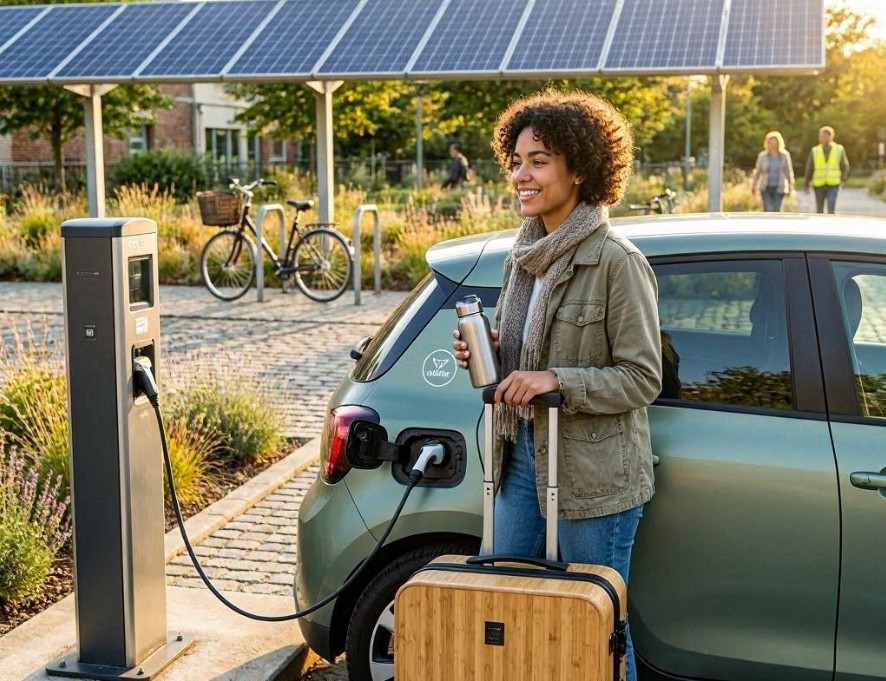
The primary environmental benefit of electric vehicles is the elimination of tailpipe emissions. Unlike combustion-engine cars, EVs do not produce direct exhaust pollutants during operation.
This makes them particularly attractive for urban travel and short-to-medium road trips where air quality and noise reduction matter.
In addition, EVs often encourage more efficient driving patterns and can be paired with renewable electricity sources, further reducing lifecycle emissions depending on the grid mix.
Key sustainability advantages
- No tailpipe emissions during driving
- Lower noise pollution in cities
- Higher energy efficiency per mile in many conditions
- Potential use of renewable charging infrastructure
These benefits are why EV rentals are increasingly positioned as part of “green mobility” offerings in travel and tourism.
How electric car rentals actually work
Modern EV rental systems are designed to reduce friction in the booking and driving process. Many platforms now operate entirely digitally, allowing users to reserve, unlock, and manage vehicles via smartphone applications.
In some systems, the phone itself acts as the key, enabling contactless pickup and return without traditional rental counters.
Vehicles are often delivered to airports, hotels, or residential addresses, making EV rentals highly compatible with flexible travel planning.
Cost considerations: are EV rentals more expensive?
A common assumption is that electric car rentals are more expensive than gasoline vehicles. In practice, pricing varies widely depending on location, vehicle class, and demand.
Daily EV rental rates in many markets often fall into a similar range as standard cars, and in some cases can be competitive or discounted to encourage adoption.
However, total cost depends not only on the rental price but also on charging behavior and infrastructure access during the trip.
Hidden cost factors to consider
- Fast-charging fees at public stations
- Idle or overstaying charging penalties
- Return battery level requirements
- Charging time impacting travel schedule
For well-planned trips with access to hotel or destination charging, EVs can be cost-effective. For long, flexible road trips, costs may vary more significantly.
Charging infrastructure: the deciding factor
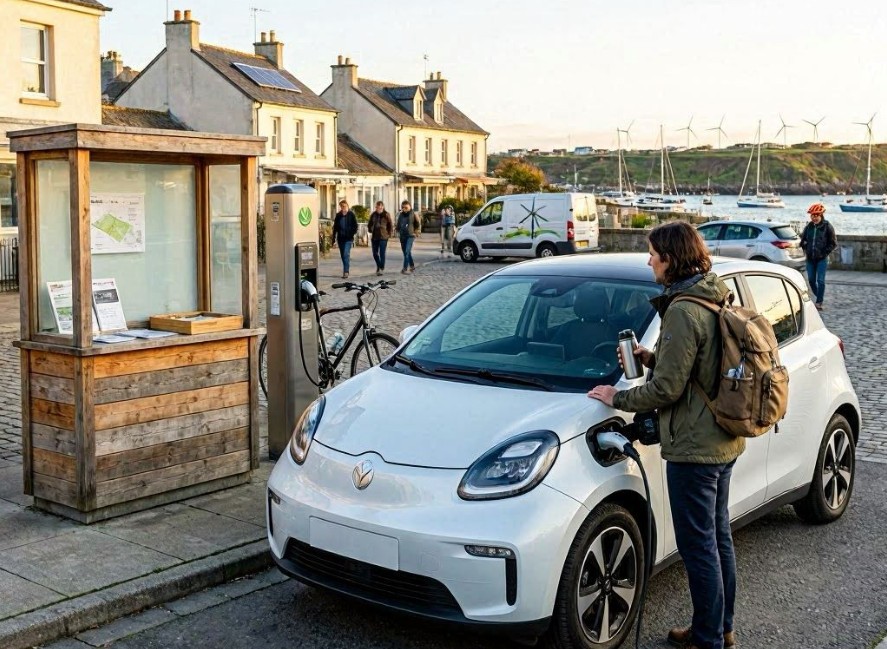
The practicality of an EV rental depends heavily on charging availability. Urban areas and well-developed tourist regions usually offer dense charging networks, while rural or remote routes may present challenges.
Travelers often need to plan routes around charging stations and consider charging speed types (fast DC charging vs slower Level 2 charging).
Some rental ecosystems include integrated charging networks or partnerships that simplify this process by bundling charging access into the rental experience.
Where EV rentals work best
Electric rentals are not universally ideal for every trip. Their advantages become most visible in specific travel contexts where distance, infrastructure, and itinerary align.
Best use cases
- City breaks and urban tourism
- Trips under 300–400 miles total distance
- Regions with dense charging networks
- Hotel-based or stationary travel itineraries
In these scenarios, EVs can offer a smoother, quieter, and more sustainable travel experience.
Where EV rentals are more challenging
Despite rapid growth, EV rentals still have limitations that eco-conscious travelers should consider before booking.
Long-distance road trips with limited charging infrastructure can introduce planning complexity and potential delays. In some cases, charging logistics may outweigh environmental or cost benefits.
Common challenges
- Limited charging access in rural regions
- Long charging times compared to refueling gasoline cars
- One-way rental restrictions in some fleets
- Variability in charging costs across networks
These factors mean EV rentals require more planning than traditional car rentals.
The eco-conscious trade-off
Choosing an EV rental is not just a technical decision—it is also a behavioral one. Travelers must balance sustainability goals with convenience, cost, and time.
In many cases, the most eco-conscious choice is not only about the vehicle type but also about trip efficiency: shorter routes, fewer unnecessary miles, and optimized travel planning.
When used appropriately, EV rentals can meaningfully reduce travel emissions while maintaining the freedom of personal transportation.
Conclusion: a practical step toward greener travel
Electric vehicle rentals represent a transitional but important step in sustainable tourism. They offer travelers a way to reduce direct emissions without sacrificing mobility.
While not yet perfect for every scenario, they are increasingly practical for urban travel and well-planned road trips.
For eco-conscious travelers, EV rentals are best viewed not as a complete replacement for all transport options, but as a powerful tool within a broader strategy of more responsible travel choices.
