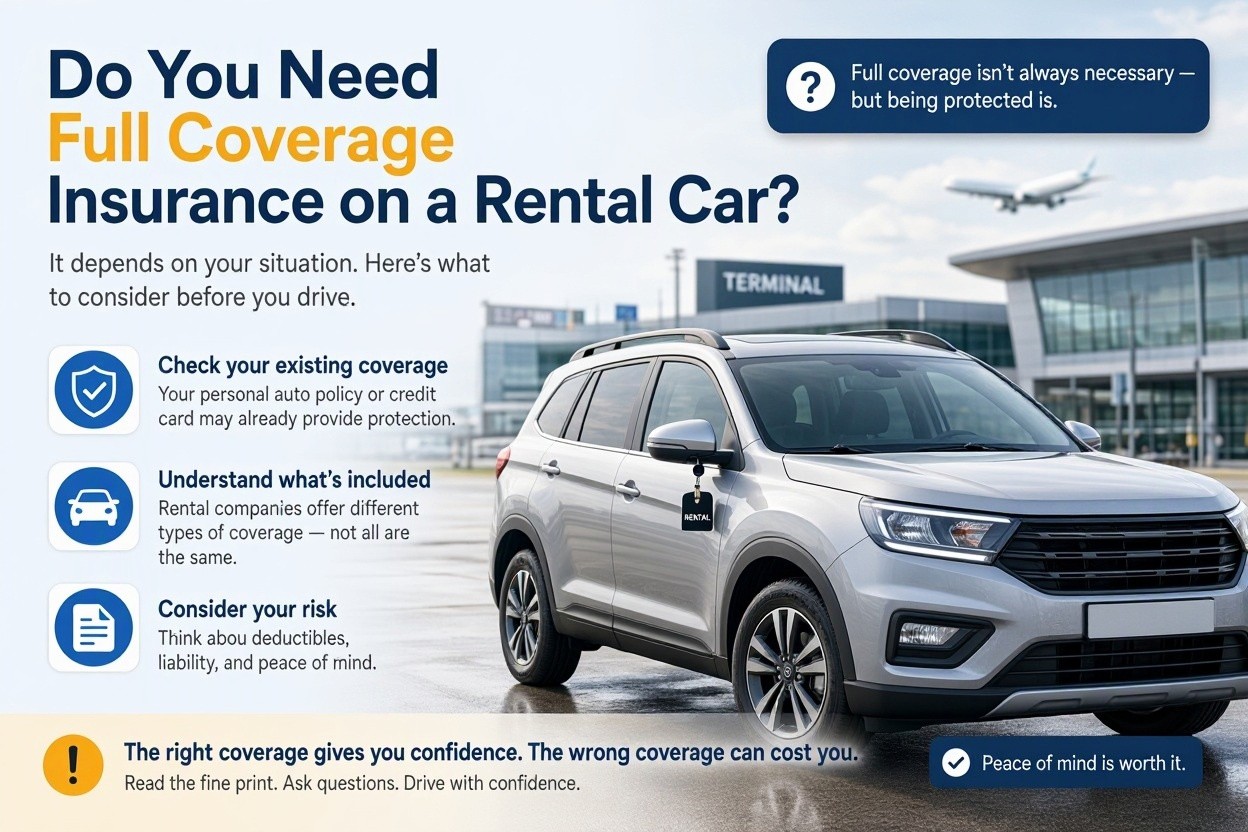
Renting a car offers freedom and convenience, but insurance options at the rental counter can be confusing. Travelers are often asked whether they want additional protection, sometimes described as full coverage insurance. Accepting every option can significantly increase the rental price, while declining protection without understanding the risks may lead to expensive consequences.
The right decision depends on your existing insurance, rental destination, vehicle type, and financial circumstances.
What Does Full Coverage Actually Mean?
Full coverage is not a standardized insurance product. Rental companies may use the expression to describe packages combining several forms of protection.
These packages can include collision damage waivers, theft protection, liability coverage, and additional services.
However, even an extensive protection package may contain exclusions, deductibles, and restrictions. Travelers should examine the actual contract rather than relying on the phrase full coverage.
Collision Damage Waiver Explained
A Collision Damage Waiver, commonly called CDW, limits or removes certain financial responsibilities for damage to the rental vehicle.
Although frequently presented alongside insurance products, CDW is generally a contractual waiver rather than a conventional insurance policy.
Depending on the agreement, drivers may still be responsible for a deductible or excess amount.
Damage caused by prohibited driving, unauthorized drivers, or violations of rental conditions may also be excluded.
What Is Supplemental Liability Insurance?
Liability protection addresses claims involving injuries or property damage suffered by other people.
Some rental agreements include legally required liability coverage, but minimum protection levels vary considerably between countries and jurisdictions.
Supplemental Liability Insurance may increase available limits beyond the basic coverage.
This protection can be especially important when existing liability limits are low or personal insurance does not apply to rental vehicles.
Does Your Personal Auto Insurance Cover Rentals?
Drivers who already own insured vehicles may have some rental car protection through their personal automobile policies.
However, coverage depends on the insurer, policy terms, destination, and purpose of travel.
Before declining rental company protection, ask your insurer whether the policy covers:
- Damage to a rental vehicle.
- Theft of the rented car.
- Third-party liability claims.
- Deductibles and exclusions.
- International rentals.
- Loss-of-use and administrative charges.
Never assume that coverage available for your personal car automatically applies to every rental.

Can Credit Cards Provide Rental Car Protection?
Some credit cards offer rental vehicle damage protection when eligible bookings are paid for using the card.
However, these benefits often have important conditions. Certain vehicle categories, countries, rental durations, and types of damage may be excluded.
Credit card protection also commonly excludes third-party liability.
Some programs require the cardholder to decline the rental company's collision damage waiver to activate the benefit.
When Additional Coverage May Be Worthwhile
Purchasing additional protection may make sense when existing insurance is insufficient or when the potential deductible would create financial difficulty.
It can also be useful when renting abroad, driving in unfamiliar conditions, or selecting a vehicle with expensive replacement parts.
Travelers should consider their willingness and ability to handle unexpected expenses rather than focusing exclusively on the daily insurance price.
When You Might Not Need Every Insurance Option
Additional rental protection may be unnecessary when your existing insurance and eligible credit card benefits already provide adequate coverage.
However, overlapping protection should be verified carefully.
Two policies may cover similar risks while leaving certain exclusions unresolved. Comparing the actual terms is more valuable than simply counting how many insurance products you have.
How Much Does Rental Car Insurance Cost?
Protection prices vary by rental company, country, vehicle category, and selected package.
For illustration, an optional protection package costing $20 per day would add $140 to a seven-day rental.
That amount may be reasonable for one traveler but unnecessary for another who already has suitable protection.
Always compare the total rental cost, including mandatory insurance and optional products.
Common Exclusions to Watch For
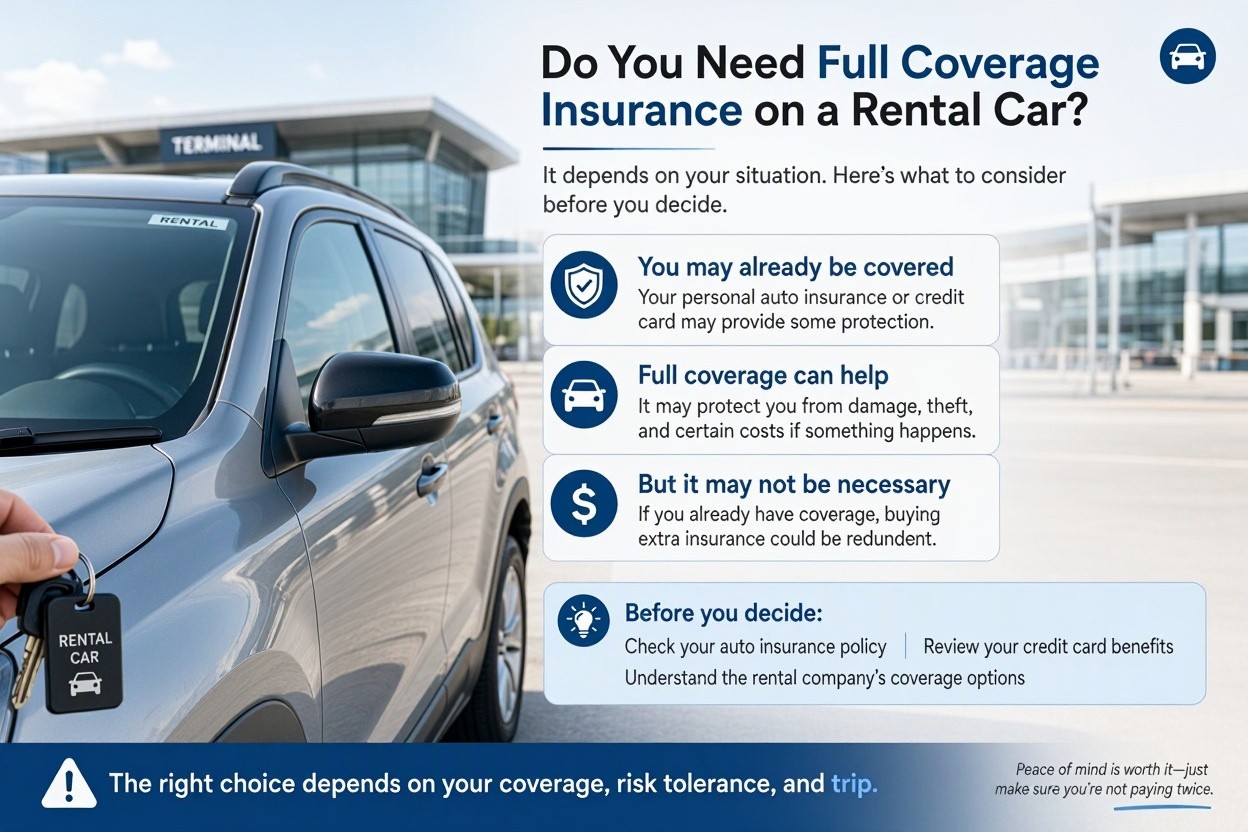
Even comprehensive protection may not cover every situation.
Common restrictions can involve:
- Driving under the influence of alcohol or drugs.
- Unauthorized drivers.
- Use on prohibited roads.
- Incorrect fuel.
- Lost keys.
- Damage to tires, glass, or undercarriage.
- Failure to follow accident reporting procedures.
Exact exclusions depend on the agreement and should be reviewed before departure.
Questions to Ask Before Declining Coverage
Before making a decision, confirm the maximum amount you could owe after an accident, the applicable deductible, and whether theft is covered.
Also check how claims are handled. Some third-party policies require travelers to pay the rental company first and request reimbursement afterward.
This distinction matters when a large security deposit or unexpected charge could affect your travel budget.
Conclusion: Choose Protection Based on Actual Risk
Full coverage insurance is not automatically necessary for every rental car booking. The best choice depends on existing policies, credit card benefits, local legal requirements, and personal financial risk tolerance.
Rather than accepting or declining every optional product, compare coverage limits, exclusions, deductibles, and claim procedures.
Understanding what you are already protected against—and what remains uncovered—helps you avoid unnecessary costs while maintaining appropriate financial protection during your trip.
